
Browse "Things"
-
Article
Communications in the North
Communications have played a special role in the North. Terrain, climate and distance made it difficult for northerners to communicate with each other or with southern Canada before the advent of electronic media. In traditional times, Inuit messages were passed through personal contact.
"https://development.thecanadianencyclopedia.ca/images/tce_placeholder.jpg?v=e9dca980c9bdb3aa11e832e7ea94f5d9" // resources/views/front/categories/view.blade.php
https://development.thecanadianencyclopedia.ca/images/tce_placeholder.jpg?v=e9dca980c9bdb3aa11e832e7ea94f5d9
-
Article
Communications Law
Communications LawCanadian communications law includes judicial decisions and statutes governing communications firms; however, the most important element of Canadian communications law comes from the decisions of the federal regulator, the CANADIAN RADIO-TELEVISION AND TELECOMMUNICATIONS COMMISSION (CRTC), which regulates radio, television, broadcast distribution undertakings (cable, satellite and IPTV television services) and most telecommunication services, wireless services and Internet service providers (ISPs). Not all communications are subject to regulatory oversight in Canada. Newspapers are not subject to...
"https://development.thecanadianencyclopedia.ca/images/tce_placeholder.jpg?v=e9dca980c9bdb3aa11e832e7ea94f5d9" // resources/views/front/categories/view.blade.php
https://development.thecanadianencyclopedia.ca/images/tce_placeholder.jpg?v=e9dca980c9bdb3aa11e832e7ea94f5d9
-
Article
Communist Party of Canada
The Communist Party of Canada, founded in 1924 as the Canadian branch of the international Communist movement, is a fringe political party that advocates for a pure socialist society based on the ideas of Vladimir Lenin and Karl Marx.
"https://d2ttikhf7xbzbs.cloudfront.net/media/media/b60ccc90-703a-48c2-a421-cd094b40b33a.jpg" // resources/views/front/categories/view.blade.php
https://d2ttikhf7xbzbs.cloudfront.net/media/media/b60ccc90-703a-48c2-a421-cd094b40b33a.jpg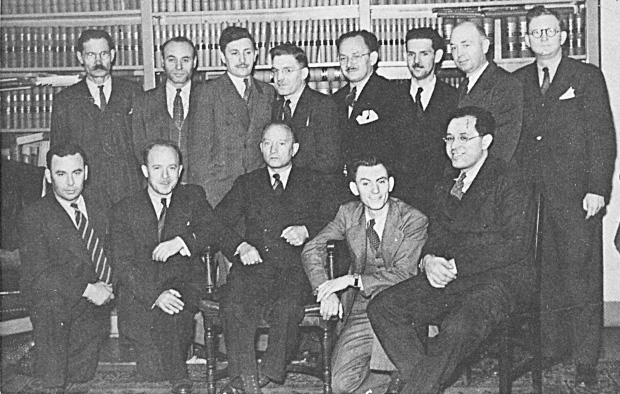
-
"https://development.thecanadianencyclopedia.ca/images/tce_placeholder.jpg?v=e9dca980c9bdb3aa11e832e7ea94f5d9" // resources/views/front/categories/view.blade.php
https://development.thecanadianencyclopedia.ca/images/tce_placeholder.jpg?v=e9dca980c9bdb3aa11e832e7ea94f5d9
-
Article
Community Arts Council of Vancouver
Community Arts Council of Vancouver. Originally an advisory body, it was established in Vancouver in 1946, the first organization of its kind in North America.
"https://development.thecanadianencyclopedia.ca/images/tce_placeholder.jpg?v=e9dca980c9bdb3aa11e832e7ea94f5d9" // resources/views/front/categories/view.blade.php
https://development.thecanadianencyclopedia.ca/images/tce_placeholder.jpg?v=e9dca980c9bdb3aa11e832e7ea94f5d9
-
Article
Community Broadcasting
Community Broadcasting is designed to fulfil social and cultural needs by allowing members of the audience to participate in decisions about programming and, in the case of radio, in the ownership of stations.
"https://development.thecanadianencyclopedia.ca/images/tce_placeholder.jpg?v=e9dca980c9bdb3aa11e832e7ea94f5d9" // resources/views/front/categories/view.blade.php
https://development.thecanadianencyclopedia.ca/images/tce_placeholder.jpg?v=e9dca980c9bdb3aa11e832e7ea94f5d9
-
Article
Community College
The community college is a public post-secondary educational institution that offers a variety of programs to high-school graduates and adults seeking further education or employment training.
"https://development.thecanadianencyclopedia.ca/images/tce_placeholder.jpg?v=e9dca980c9bdb3aa11e832e7ea94f5d9" // resources/views/front/categories/view.blade.php
https://development.thecanadianencyclopedia.ca/images/tce_placeholder.jpg?v=e9dca980c9bdb3aa11e832e7ea94f5d9
-
Article
Community Concert Associations
Community Concert Associations. Autonomous concert associations organized by individual communities and affiliated with Community Concerts, Inc, a subsidiary of Columbia Artists Management Inc, New York.
"https://development.thecanadianencyclopedia.ca/images/tce_placeholder.jpg?v=e9dca980c9bdb3aa11e832e7ea94f5d9" // resources/views/front/categories/view.blade.php
https://development.thecanadianencyclopedia.ca/images/tce_placeholder.jpg?v=e9dca980c9bdb3aa11e832e7ea94f5d9
-
Article
Comox Valley Youth Music Centre
Comox Valley Youth Music Centre (formerly Courtenay Youth Music Camp).
"https://development.thecanadianencyclopedia.ca/images/tce_placeholder.jpg?v=e9dca980c9bdb3aa11e832e7ea94f5d9" // resources/views/front/categories/view.blade.php
https://development.thecanadianencyclopedia.ca/images/tce_placeholder.jpg?v=e9dca980c9bdb3aa11e832e7ea94f5d9
-
Article
Compact Theory of Confederation
Compact Theory of Confederation, see CONSTITUTIONAL HISTORY.
"https://development.thecanadianencyclopedia.ca/images/tce_placeholder.jpg?v=e9dca980c9bdb3aa11e832e7ea94f5d9" // resources/views/front/categories/view.blade.php
https://development.thecanadianencyclopedia.ca/images/tce_placeholder.jpg?v=e9dca980c9bdb3aa11e832e7ea94f5d9
-
Article
Company of One Hundred Associates
The Company of New France, or Company of One Hundred Associates (Compagnie des Cent-Associés) as it was more commonly known, was formed in France in 1627. Its purpose was to increase New France’s population while enjoying a monopoly on almost all colonial trade. It took bold steps but suffered many setbacks. The company folded in 1663. It earned little return on its investment, though it helped establish New France as a viable colony.
"https://d2ttikhf7xbzbs.cloudfront.net/media/media/e4ec1e55-01c2-4b77-a220-f05a84fd4c9c.jpg" // resources/views/front/categories/view.blade.php
https://d2ttikhf7xbzbs.cloudfront.net/media/media/e4ec1e55-01c2-4b77-a220-f05a84fd4c9c.jpg
-
Article
Compagnie des Indes occidentales
The Compagnie des Indes occidentales was a trading company that drove France’s colonial economy from 1664 to 1674. Its name translates to West Indies Company. King Louis XIV gave the company exclusive rights to trade and govern in all French colonies. Its territory extended from the Americas to the Caribbean and Western Africa. In addition to natural resources such as furs and sugar, the Compagnie traded enslaved people. This company is not to be confused with the French trading company founded by John Law and renamed Compagnie des Indes in 1719.
"https://development.thecanadianencyclopedia.ca/images/tce_placeholder.jpg?v=e9dca980c9bdb3aa11e832e7ea94f5d9" // resources/views/front/categories/view.blade.php
https://development.thecanadianencyclopedia.ca/images/tce_placeholder.jpg?v=e9dca980c9bdb3aa11e832e7ea94f5d9
-
Article
Compagnie du Nord
Compagnie du Nord (Compagnie de la Baie du Nord), fd 1682 by Canadian merchants, led by Charles Aubert de la Chesnaye, to trade into Hudson Bay by sea.
"https://development.thecanadianencyclopedia.ca/images/tce_placeholder.jpg?v=e9dca980c9bdb3aa11e832e7ea94f5d9" // resources/views/front/categories/view.blade.php
https://development.thecanadianencyclopedia.ca/images/tce_placeholder.jpg?v=e9dca980c9bdb3aa11e832e7ea94f5d9
-
Article
Company of Young Canadians
Company of Young Canadians, a short-lived voluntary agency of the government of Canada, established with a mandate to encourage social, economic and community development in Canada.
"https://development.thecanadianencyclopedia.ca/images/tce_placeholder.jpg?v=e9dca980c9bdb3aa11e832e7ea94f5d9" // resources/views/front/categories/view.blade.php
https://development.thecanadianencyclopedia.ca/images/tce_placeholder.jpg?v=e9dca980c9bdb3aa11e832e7ea94f5d9
-
Article
Company Towns
Company towns, important in Canada's capital formation and industrialization, urban development, and trade-union movement.
"https://development.thecanadianencyclopedia.ca/images/tce_placeholder.jpg?v=e9dca980c9bdb3aa11e832e7ea94f5d9" // resources/views/front/categories/view.blade.php
https://development.thecanadianencyclopedia.ca/images/tce_placeholder.jpg?v=e9dca980c9bdb3aa11e832e7ea94f5d9