
Browse "Things"
-
Article
Chimaera
Chimaera, ratfish, or ghost shark, strange-looking marine fish belonging to the subclass Holocephali, class Chondrichthyes and thus related to sharks and rays.
"https://d2ttikhf7xbzbs.cloudfront.net/media/media/b4d6669d-727d-415a-b083-0a7effa29d92.jpg" // resources/views/front/categories/view.blade.php
https://d2ttikhf7xbzbs.cloudfront.net/media/media/b4d6669d-727d-415a-b083-0a7effa29d92.jpg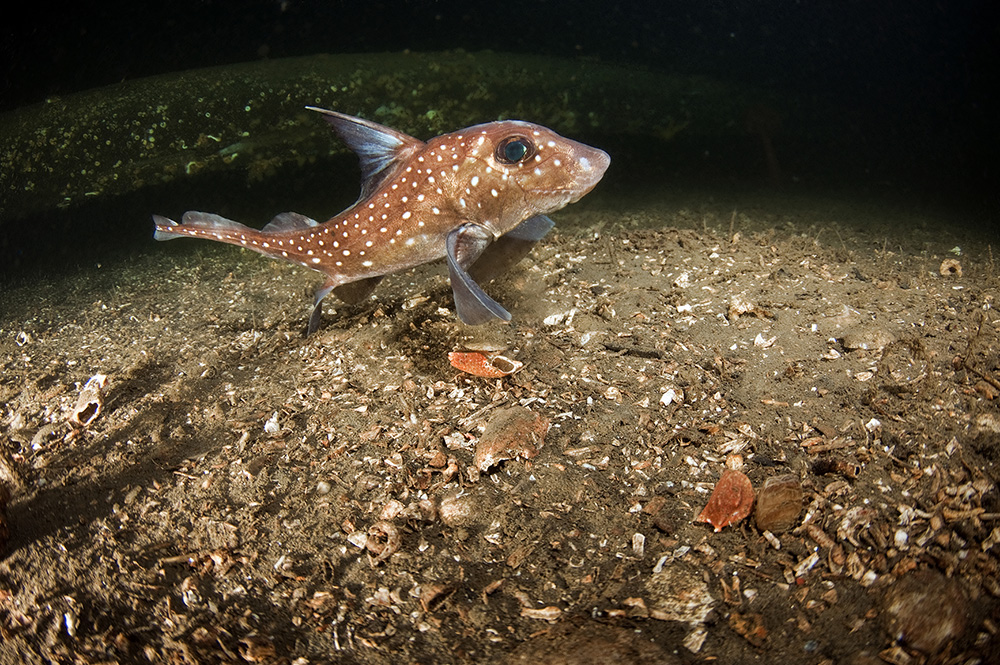
-
Article
Chimes
A set of bells, large or small, located in or out of doors, played by hand or, if stationary, automatically. A simpler and older instrument than the carillon, chimes are used primarily for sounding melodies.
"https://development.thecanadianencyclopedia.ca/images/tce_placeholder.jpg?v=e9dca980c9bdb3aa11e832e7ea94f5d9" // resources/views/front/categories/view.blade.php
https://development.thecanadianencyclopedia.ca/images/tce_placeholder.jpg?v=e9dca980c9bdb3aa11e832e7ea94f5d9
-
Article
Chinese Music in Canada
The migration of Chinese to Canada began in 1858 as a result of the Fraser River Gold Rush in British Columbia. Most of the 19th-century migrants, including those contracted for CPR labour from 1882 to 1885, came from Kwangtung (Canton) Province, some via the USA.
"https://development.thecanadianencyclopedia.ca/images/tce_placeholder.jpg?v=e9dca980c9bdb3aa11e832e7ea94f5d9" // resources/views/front/categories/view.blade.php
https://development.thecanadianencyclopedia.ca/images/tce_placeholder.jpg?v=e9dca980c9bdb3aa11e832e7ea94f5d9
-
Article
Chinese Canadians
Chinese Canadians are one of the largest ethnic groups in the country. In the 2021 census, more than 1.7 million people reported being of Chinese origin. Despite their importance to the Canadian economy, including the construction of the Canadian Pacific Railway (CPR), many European Canadians were historically hostile to Chinese immigration. A prohibitive head tax restricted Chinese immigration to Canada from 1885 to 1923. From 1923 to 1947, the Chinese were excluded altogether from immigrating to Canada. (See Chinese Immigration Act.) Since 1900, Chinese Canadians have settled primarily in urban areas, particularly in Vancouver and Toronto. They have contributed to every aspect of Canadian society, from literature to sports, politics to civil rights, film to music, business to philanthropy, and education to religion. This is the full-length entry about Chinese Canadians. For a plain-language summary, please see Chinese Canadians (Plain-Language Summary).
"https://d2ttikhf7xbzbs.cloudfront.net/media/media/bff27f89-2e99-43af-a42e-36f38dbcdf8d.jpg" // resources/views/front/categories/view.blade.php
https://d2ttikhf7xbzbs.cloudfront.net/media/media/bff27f89-2e99-43af-a42e-36f38dbcdf8d.jpg
-
Article
Chinese Canadians of Force 136
Force 136 was a branch of the British Special Operations Executive (SOE) during the Second World War. Its covert missions were based in Japanese-occupied Southeast Asia, where orders were to support and train local resistance movements to sabotage Japanese supply lines and equipment. While Force 136 recruited mostly Southeast Asians, it also recruited about 150 Chinese Canadians. It was thought that Chinese Canadians would blend in with local populations and speak local languages. Earlier in the war, many of these men had volunteered their services to Canada but were either turned away or recruited and sidelined. Force 136 became an opportunity for Chinese Canadian men to demonstrate their courage and skills and especially their loyalty to Canada.
"https://d2ttikhf7xbzbs.cloudfront.net/media/new_article_images/Force136/Force136-India-w-guns.jpg" // resources/views/front/categories/view.blade.php
https://d2ttikhf7xbzbs.cloudfront.net/media/new_article_images/Force136/Force136-India-w-guns.jpg
-
Article
Chinese Head Tax in Canada
The Chinese head tax was enacted to restrict immigration after Chinese labour was no longer needed to build the Canadian Pacific Railway. Between 1885 and 1923, Chinese immigrants had to pay a head tax to enter Canada. The tax was levied under the Chinese Immigration Act (1885). It was the first legislation in Canadian history to exclude immigration on the basis of ethnic background. With few exceptions, Chinese people had to pay at least $50 to come to Canada. The tax was later raised to $100, then to $500. During the 38 years the tax was in effect, around 82,000 Chinese immigrants paid nearly $23 million in tax. The head tax was removed with the passing of the Chinese Immigration Act in 1923. Also known as the Chinese Exclusion Act, it banned all Chinese immigrants until its repeal in 1947. In 2006, the federal government apologized for the head tax and its other racist immigration policies targeting Chinese people. This is the full-length entry about the Chinese Head Tax. For a plain-language summary, please see Chinese Head Tax in Canada (Plain-Language Summary).
"https://d2ttikhf7xbzbs.cloudfront.net/media/media/876dbb1e-74e3-4cfe-b961-a6d31d296fd6.jpg" // resources/views/front/categories/view.blade.php
https://d2ttikhf7xbzbs.cloudfront.net/media/media/876dbb1e-74e3-4cfe-b961-a6d31d296fd6.jpg
-
Article
Chinese Immigration Act
The Chinese Immigration Act of 1923, known also as the Chinese Exclusion Act, banned the entry of virtually all Chinese immigrants for 24 years. Although migration into Canada from most countries was controlled or restricted in some way, only Chinese people were singled out completely from entering on the basis of race. The four exceptions to the exclusion were students, merchants (excluding laundry, restaurant and retail operators), diplomats and Canadian-born Chinese returning from education in China. The limit on absence from Canada was two years, and the consequence for not returning on time was being barred re-entry. Additionally, every person of Chinese descent, whether Canadian-born or naturalized, was required to register for an identity card within 12 months. The penalty for noncompliance was imprisonment or a fine of up to $500. Though the Act was repealed in 1947, immigration restrictions on the basis of race and national origin were not fully scrubbed until 1967.
"https://d2ttikhf7xbzbs.cloudfront.net/media/media/d0c5f1d6-6030-4a96-900c-3efed6463116.jpg" // resources/views/front/categories/view.blade.php
https://d2ttikhf7xbzbs.cloudfront.net/media/media/d0c5f1d6-6030-4a96-900c-3efed6463116.jpg
-
Article
Lunar New Year in Canada
The Lunar New Year — also known as the Spring Festival, Chinese New Year, Tet for Vietnamese Canadians, or Solnal for Korean Canadians — is celebrated in Canada and several other countries. It is one of the largest celebrations for Canada’s Chinese population, it is also celebrated by Canadians from Vietnam, Korea and Southeast Asia. Although it is not a statutory holiday in Canada, many Asian Canadian businesses are closed or have reduced hours for the occasion. Since 1 June 2016, this celebration has been recognized as an official holiday in Canada.
"https://d2ttikhf7xbzbs.cloudfront.net/media/media/e1474526-547c-47b7-90e4-afda069c28bf.jpg" // resources/views/front/categories/view.blade.php
https://d2ttikhf7xbzbs.cloudfront.net/media/media/e1474526-547c-47b7-90e4-afda069c28bf.jpg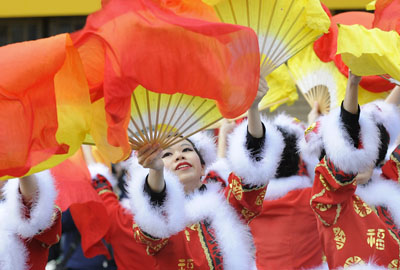
-
Article
Chinook
Chinooks are warm, dry, gusty, westerly winds that blow down from the Rocky Mountains into the mountains' eastern slopes and the western prairies. The Chinook belongs to a family of winds experienced in many parts of the world where long mountain chains lie more or less at right angles to the prevailing wind. Examples include the Foehn in Europe, the Zonda in Argentina and the Berg in South Africa. In Canada, the Chinook belt lies almost exclusively within southern and central Alberta.
"https://d2ttikhf7xbzbs.cloudfront.net/media/media/ecf3dcdb-d1d5-49d1-a385-264f348ad3b2.jpg" // resources/views/front/categories/view.blade.php
https://d2ttikhf7xbzbs.cloudfront.net/media/media/ecf3dcdb-d1d5-49d1-a385-264f348ad3b2.jpg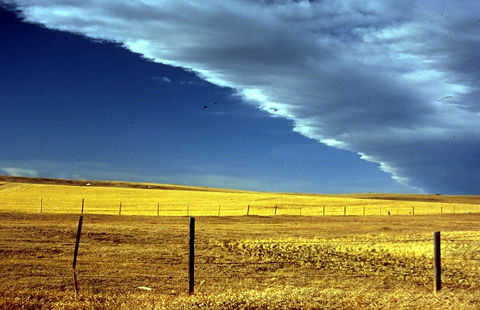
-
Article
Chinook Jargon
Chinook Jargon or Chinook Wawa — wawa meaning "talk" — is a pidgin language that was prevalent in British Columbia and the Pacific Northwest in the 1800s and early 1900s. Its small vocabulary and simplified grammar and sound system made it ideal for communication between diverse communities, especially those engaged in trade. The language is based on Lower Chinook, Nuu-chah-nulth (Nootka), French, English, with some contributions from Salishan, and other Indigenous languages. It is estimated that approximately 100,000 people could speak Chinook Jargon in 1875, and it was used widely in court testimony, newspaper advertising, missionary activity among Indigenous peoples, and everyday conversation from central British Columbia to northern California.
"https://d2ttikhf7xbzbs.cloudfront.net/media/media/8f739150-9c79-43b0-9583-ee90de74145c.jpg" // resources/views/front/categories/view.blade.php
https://d2ttikhf7xbzbs.cloudfront.net/media/media/8f739150-9c79-43b0-9583-ee90de74145c.jpg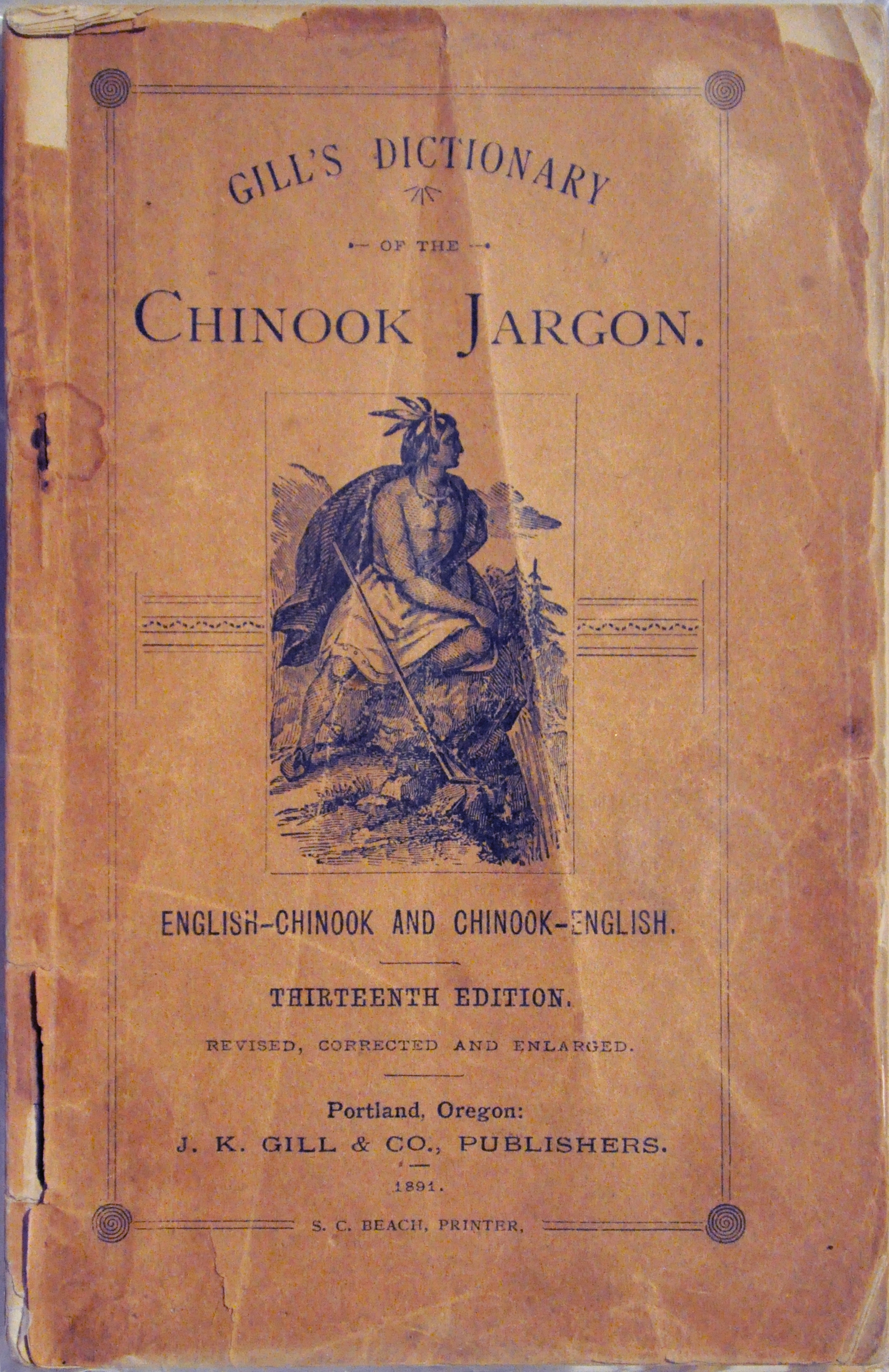
-
Article
Denesuline (Chipewyan)
The Denesuline (also known as Chipewyan) are Indigenous Peoples in the Subarctic region of Canada, with communities in Manitoba, Saskatchewan, Alberta and the Northwest Territories. The Denesuline are Dene, and share many cultural and linguistic similarities with neighbouring Dene communities. The 2021 census reported that 4,815 people claimed to be of Denesuline ancestry. However, the registered population of Denesuline First Nations may be higher. Denesuline are closely associated with other Dene groups as well as northern Cree and Métis, who may share their communities and also speak Denesuline. As such, population and language numbers are approximations.
"https://d2ttikhf7xbzbs.cloudfront.net/media/media/d042a7cd-8095-4a4a-b112-ef4791bf04c6.jpg" // resources/views/front/categories/view.blade.php
https://d2ttikhf7xbzbs.cloudfront.net/media/media/d042a7cd-8095-4a4a-b112-ef4791bf04c6.jpg
-
"https://d2ttikhf7xbzbs.cloudfront.net/media/media/d73e7f6e-e7f7-411b-bb2d-f330acc11af3.jpg" // resources/views/front/categories/view.blade.php
https://d2ttikhf7xbzbs.cloudfront.net/media/media/d73e7f6e-e7f7-411b-bb2d-f330acc11af3.jpg
-
Article
Chiropractic
Chiropractic is the manipulation of the spinal column as a means of curing disease. The word comes from the Greek chiro ("hands") and practic ("to practice"). The theory of chiropractic originated with D.D. Palmer, who was born in Port Perry (Ontario) in 1845.
"https://development.thecanadianencyclopedia.ca/images/tce_placeholder.jpg?v=e9dca980c9bdb3aa11e832e7ea94f5d9" // resources/views/front/categories/view.blade.php
https://development.thecanadianencyclopedia.ca/images/tce_placeholder.jpg?v=e9dca980c9bdb3aa11e832e7ea94f5d9
-
Article
Chiroptera
Chiroptera is the order of mammals (Mammalia) that includes all bats, living (~1200 species) and fossil.
"https://d2ttikhf7xbzbs.cloudfront.net/media/Twitter_Cards/brown bat.jpg" // resources/views/front/categories/view.blade.php
https://d2ttikhf7xbzbs.cloudfront.net/media/Twitter_Cards/brown bat.jpg
-
Article
Cholera in Canada
Cholera first reached Canada in 1832, brought by immigrants from Britain. Epidemics occurred in 1832, 1834, 1849, 1851, 1852 and 1854. There were cases in Halifax in 1881. The epidemics killed at least 20 000 people in Canada.
"https://d2ttikhf7xbzbs.cloudfront.net/media/media/aa5925dd-565b-4a8e-bc1b-082fe61795b3.jpg" // resources/views/front/categories/view.blade.php
https://d2ttikhf7xbzbs.cloudfront.net/media/media/aa5925dd-565b-4a8e-bc1b-082fe61795b3.jpg