
Browse "Halls & Theatres"
-
Article
Factory Theatre
Gass, along with co-founder Frank Trotz, borrowed $3000 to launch the company, whose first home was in a greasy former candle factory above an auto-body shop at 374 Dupont Street.
"https://d2ttikhf7xbzbs.cloudfront.net/media/media/314afe7b-e739-4d34-b72e-0f60a9af41fc.jpg" // resources/views/front/categories/view.blade.php
https://d2ttikhf7xbzbs.cloudfront.net/media/media/314afe7b-e739-4d34-b72e-0f60a9af41fc.jpg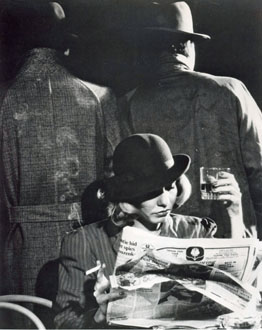
-
Article
Festival Theatre
The term "festival theatre" emerged in England in the nineteenth century to refer to special theatrical performances mounted to celebrate exceptional authors or dates. The festival held in 1864 at Stratford-Upon-Avon, England, to mark the tercentenary of Shakespeare's birth is an early example.
"https://d2ttikhf7xbzbs.cloudfront.net/media/media/5c9b172d-1120-47c2-9133-24b41f9f1973.jpg" // resources/views/front/categories/view.blade.php
https://d2ttikhf7xbzbs.cloudfront.net/media/media/5c9b172d-1120-47c2-9133-24b41f9f1973.jpg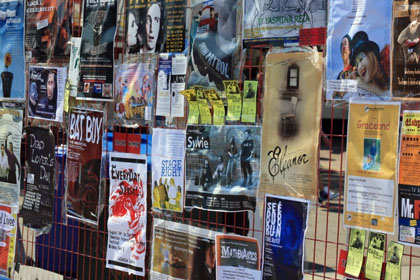
-
Article
Music in Fredericton
Fredericton, NB. New Brunswick's capital city, located on the Saint John River on the site of a 1732 Acadian, and later Loyalist English, settlement at St Anne's Point. The name Fredericton was adopted in 1785. Incorporation as a city was accomplished in 1848.
"https://development.thecanadianencyclopedia.ca/images/tce_placeholder.jpg?v=e9dca980c9bdb3aa11e832e7ea94f5d9" // resources/views/front/categories/view.blade.php
https://development.thecanadianencyclopedia.ca/images/tce_placeholder.jpg?v=e9dca980c9bdb3aa11e832e7ea94f5d9
-
Article
George's Jazz Room
George's Jazz Room (George's Spaghetti House, 1956-84). Restaurant, the longest-running jazz club in Canada.
"https://development.thecanadianencyclopedia.ca/images/tce_placeholder.jpg?v=e9dca980c9bdb3aa11e832e7ea94f5d9" // resources/views/front/categories/view.blade.php
https://development.thecanadianencyclopedia.ca/images/tce_placeholder.jpg?v=e9dca980c9bdb3aa11e832e7ea94f5d9
-
Article
Music in Guelph
Guelph, Ont. Founded 1827 by John Galt in the heart of agricultural Ontario and incorporated in 1879. In 1846 there were 1240 people living in Guelph. By 1988 the population had reached 80,786 including a large Italian.community.
"https://development.thecanadianencyclopedia.ca/images/tce_placeholder.jpg?v=e9dca980c9bdb3aa11e832e7ea94f5d9" // resources/views/front/categories/view.blade.php
https://development.thecanadianencyclopedia.ca/images/tce_placeholder.jpg?v=e9dca980c9bdb3aa11e832e7ea94f5d9
-
Article
Music in Halifax
Capital of Nova Scotia and major seaport established in 1749 as a British settlement (population 2500) and military base. The influx of Loyalists resulting from the American Revolution caused the population to rise to about 9000 by 1800.
"https://development.thecanadianencyclopedia.ca/images/tce_placeholder.jpg?v=e9dca980c9bdb3aa11e832e7ea94f5d9" // resources/views/front/categories/view.blade.php
https://development.thecanadianencyclopedia.ca/images/tce_placeholder.jpg?v=e9dca980c9bdb3aa11e832e7ea94f5d9
-
Article
Music in Hamilton
City on Lake Ontario with a natural bay as harbour. Taking its name from George H. Hamilton (1787-1835), who laid it out in 1813, the town was incorporated as a city in 1846 when, with a population of 10,000, it was the second-largest city in Upper Canada.
"https://development.thecanadianencyclopedia.ca/images/tce_placeholder.jpg?v=e9dca980c9bdb3aa11e832e7ea94f5d9" // resources/views/front/categories/view.blade.php
https://development.thecanadianencyclopedia.ca/images/tce_placeholder.jpg?v=e9dca980c9bdb3aa11e832e7ea94f5d9
-
Article
Hamilton Place
Hamilton Place (formally Ronald V. Joyce Centre for the Performing Arts at Hamilton Place). Multi-purpose arts centre, situated on Main St in downtown Hamilton, Ont.
"https://development.thecanadianencyclopedia.ca/images/tce_placeholder.jpg?v=e9dca980c9bdb3aa11e832e7ea94f5d9" // resources/views/front/categories/view.blade.php
https://development.thecanadianencyclopedia.ca/images/tce_placeholder.jpg?v=e9dca980c9bdb3aa11e832e7ea94f5d9
-
Article
Haskell Opera House/Opéra Haskell
Haskell Opera House/Opéra Haskell. A 400-seat theatre that has the distinction of being partly in Canada (Stanstead, formerly Rock Island, Quebec) and partly in the United States (Derby Line, Vermont).
"https://development.thecanadianencyclopedia.ca/images/tce_placeholder.jpg?v=e9dca980c9bdb3aa11e832e7ea94f5d9" // resources/views/front/categories/view.blade.php
https://development.thecanadianencyclopedia.ca/images/tce_placeholder.jpg?v=e9dca980c9bdb3aa11e832e7ea94f5d9
-
Article
Her Majesty's Theatre
Her (His) Majesty's Theatre. Montreal theatre located on Guy St and seating 1750 on a main floor and two balconies.
"https://development.thecanadianencyclopedia.ca/images/tce_placeholder.jpg?v=e9dca980c9bdb3aa11e832e7ea94f5d9" // resources/views/front/categories/view.blade.php
https://development.thecanadianencyclopedia.ca/images/tce_placeholder.jpg?v=e9dca980c9bdb3aa11e832e7ea94f5d9
-
Article
Jazz City
Jazz City (formally, Jazz City International Jazz Festival 1980-90, du Maurier Ltd Jazz City, as of 1991). It was established by the Edmonton Jazz Society in 1980 under the direction of Marc Vasey in response to an initiative from Alberta Culture on the occasion of the province's 75th anniversary.
"https://development.thecanadianencyclopedia.ca/images/tce_placeholder.jpg?v=e9dca980c9bdb3aa11e832e7ea94f5d9" // resources/views/front/categories/view.blade.php
https://development.thecanadianencyclopedia.ca/images/tce_placeholder.jpg?v=e9dca980c9bdb3aa11e832e7ea94f5d9
-
Article
Music in Joliette
City situated 75 kilometres to the north-east of Montreal, incorporated on 18 October 1863. In 1991, Joliette had a population of about 31,000 inhabitants.
"https://development.thecanadianencyclopedia.ca/images/tce_placeholder.jpg?v=e9dca980c9bdb3aa11e832e7ea94f5d9" // resources/views/front/categories/view.blade.php
https://development.thecanadianencyclopedia.ca/images/tce_placeholder.jpg?v=e9dca980c9bdb3aa11e832e7ea94f5d9
-
Article
Music in Kingston
City at the eastern end of Lake Ontario, founded by Frontenac as Fort Cataraqui in 1673 and later renamed Fort Frontenac. It was captured by the British in 1758 and named Kingston in 1783 by Loyalists fleeing from New York.
"https://development.thecanadianencyclopedia.ca/images/tce_placeholder.jpg?v=e9dca980c9bdb3aa11e832e7ea94f5d9" // resources/views/front/categories/view.blade.php
https://development.thecanadianencyclopedia.ca/images/tce_placeholder.jpg?v=e9dca980c9bdb3aa11e832e7ea94f5d9
-
Article
Music in Kitchener-Waterloo
Twin cities in southwestern Ontario. In both, a significant proportion of the population has always been of German and Mennonite stock. Kitchener, the larger of the two cities, was called Ebytown until 1824 and Berlin until 1916.
"https://development.thecanadianencyclopedia.ca/images/tce_placeholder.jpg?v=e9dca980c9bdb3aa11e832e7ea94f5d9" // resources/views/front/categories/view.blade.php
https://development.thecanadianencyclopedia.ca/images/tce_placeholder.jpg?v=e9dca980c9bdb3aa11e832e7ea94f5d9
-
Article
Music in Laval
City to the north of Montreal bounded by l'île Jésus. Until 1854 the tilling of the soil was done within the framework of the seigneurial system.
"https://development.thecanadianencyclopedia.ca/images/tce_placeholder.jpg?v=e9dca980c9bdb3aa11e832e7ea94f5d9" // resources/views/front/categories/view.blade.php
https://development.thecanadianencyclopedia.ca/images/tce_placeholder.jpg?v=e9dca980c9bdb3aa11e832e7ea94f5d9