
Browse "Trade"
-
Article
Commodity Inspection and Grading
Commodity Inspection and GradingCanada's AGRICULTURE AND FOOD inspection and grading system has 2 major goals: first, it endeavours to provide standards of quality and grades that are readily recognizable and acceptable in domestic and international commodity and food markets; second, it attempts to encourage concern for safety and nutrition in the processing, distribution and retailing of food products. Both of these objectives contribute to consumer protection. Commodity inspection and grading have a long history in...
"https://development.thecanadianencyclopedia.ca/images/tce_placeholder.jpg?v=e9dca980c9bdb3aa11e832e7ea94f5d9" // resources/views/front/categories/view.blade.php
https://development.thecanadianencyclopedia.ca/images/tce_placeholder.jpg?v=e9dca980c9bdb3aa11e832e7ea94f5d9
-
Article
Commodity Trading
Commodity futures markets provide a means for the organized trading of contracts for the delivery of goods at a later date. Today, these include agricultural products, metals, forest products, petroleum products, interest rates and stocks.
"https://development.thecanadianencyclopedia.ca/images/tce_placeholder.jpg?v=e9dca980c9bdb3aa11e832e7ea94f5d9" // resources/views/front/categories/view.blade.php
https://development.thecanadianencyclopedia.ca/images/tce_placeholder.jpg?v=e9dca980c9bdb3aa11e832e7ea94f5d9
-
Macleans
Copper-trading Scandal
Executives are nervously punching new numbers into their calculators at the headquarters of Gibraltar Mines Ltd. in Williams Lake, B.C.This article was originally published in Maclean's Magazine on July 1, 1996
"https://development.thecanadianencyclopedia.ca/images/tce_placeholder.jpg?v=e9dca980c9bdb3aa11e832e7ea94f5d9" // resources/views/front/categories/view.blade.php
https://development.thecanadianencyclopedia.ca/images/tce_placeholder.jpg?v=e9dca980c9bdb3aa11e832e7ea94f5d9
-
"https://development.thecanadianencyclopedia.ca/images/tce_placeholder.jpg?v=e9dca980c9bdb3aa11e832e7ea94f5d9" // resources/views/front/categories/view.blade.php
https://development.thecanadianencyclopedia.ca/images/tce_placeholder.jpg?v=e9dca980c9bdb3aa11e832e7ea94f5d9
-
Article
Customs and Excise
Customs and excise, taxes on goods, are one of the world's oldest sources of government revenue. Customs duties are applied on imported products while excise duties and taxes are generally applied on goods of domestic manufacture, notably liquor and tobacco.
"https://development.thecanadianencyclopedia.ca/images/tce_placeholder.jpg?v=e9dca980c9bdb3aa11e832e7ea94f5d9" // resources/views/front/categories/view.blade.php
https://development.thecanadianencyclopedia.ca/images/tce_placeholder.jpg?v=e9dca980c9bdb3aa11e832e7ea94f5d9
-
Macleans
Debate Over Common Canadian/US Dollar
This article was originally published in Maclean’s magazine on July 5, 1999. Partner content is not updated. There was a time when it was one of those textbook facts drummed into the heads of schoolchildren, never to slip the mind: Canada and the United States share the longest undefended border in the world.
"https://development.thecanadianencyclopedia.ca/images/tce_placeholder.jpg?v=e9dca980c9bdb3aa11e832e7ea94f5d9" // resources/views/front/categories/view.blade.php
https://development.thecanadianencyclopedia.ca/images/tce_placeholder.jpg?v=e9dca980c9bdb3aa11e832e7ea94f5d9
-
Article
Global Affairs Canada (GAC)
Global Affairs Canada (GAC) was originally founded as the Department of External Affairs in 1909 by Prime Minister Sir Wilfrid Laurier. The operations, mandate and title of the department have evolved over the years. Although legally incorporated as the Department of Foreign Affairs, Trade and Development, its public designation since 2015 has been Global Affairs Canada. The department is responsible for overseeing Canada’s international engagement, including diplomatic relations, providing consular services, promoting international trade and international law, and leading Canada’s international development and humanitarian assistance.
"https://development.thecanadianencyclopedia.ca/images/tce_placeholder.jpg?v=e9dca980c9bdb3aa11e832e7ea94f5d9" // resources/views/front/categories/view.blade.php
https://development.thecanadianencyclopedia.ca/images/tce_placeholder.jpg?v=e9dca980c9bdb3aa11e832e7ea94f5d9
-
Macleans
Dollar Falls
In Quebec, they call it referendum fever. And of all those who fell into its grip last week, perhaps no one was more surprised than René Lepage, director of the community health clinic in the lower St. Lawrence River town of Matane.This article was originally published in Maclean's Magazine on September 25, 1995
"https://development.thecanadianencyclopedia.ca/images/tce_placeholder.jpg?v=e9dca980c9bdb3aa11e832e7ea94f5d9" // resources/views/front/categories/view.blade.php
https://development.thecanadianencyclopedia.ca/images/tce_placeholder.jpg?v=e9dca980c9bdb3aa11e832e7ea94f5d9
-
Article
Canada–US Economic Relations
Economic relations between Canada and the US are of paramount importance to Canada.
"https://d2ttikhf7xbzbs.cloudfront.net/media/media/9da06892-ef18-4652-b682-3bb385411454.jpg" // resources/views/front/categories/view.blade.php
https://d2ttikhf7xbzbs.cloudfront.net/media/media/9da06892-ef18-4652-b682-3bb385411454.jpg
-
Article
Exchange Rates
The dollar became the official monetary unit of the Province of Canada on 1 January 1858 and the official currency of Canada after Confederation.
"https://development.thecanadianencyclopedia.ca/images/tce_placeholder.jpg?v=e9dca980c9bdb3aa11e832e7ea94f5d9" // resources/views/front/categories/view.blade.php
https://development.thecanadianencyclopedia.ca/images/tce_placeholder.jpg?v=e9dca980c9bdb3aa11e832e7ea94f5d9
-
Article
Exports from Canada
Exports are goods or services that residents of one country sell to residents of another country. Since its earliest days, Canada’s economic prosperity has relied on exports to larger markets; first through its colonial ties to Britain and later due to its geographic proximity to the United States. Billions of dollars of goods and services cross Canada’s border each year. (See International Trade.) Exports make up about a third of Canada’s gross domestic product (GDP). In 2019, Canadians exported $729 billion worth of goods and services. Almost 75 per cent of Canada’s total exports go to the United States. (See Canada-US Economic Relations.) Other major markets include the European Union, China and Japan.
"https://d2ttikhf7xbzbs.cloudfront.net/media/media/33b5ca34-f7a3-4d8f-a618-a261bba3a0ef.jpg" // resources/views/front/categories/view.blade.php
https://d2ttikhf7xbzbs.cloudfront.net/media/media/33b5ca34-f7a3-4d8f-a618-a261bba3a0ef.jpg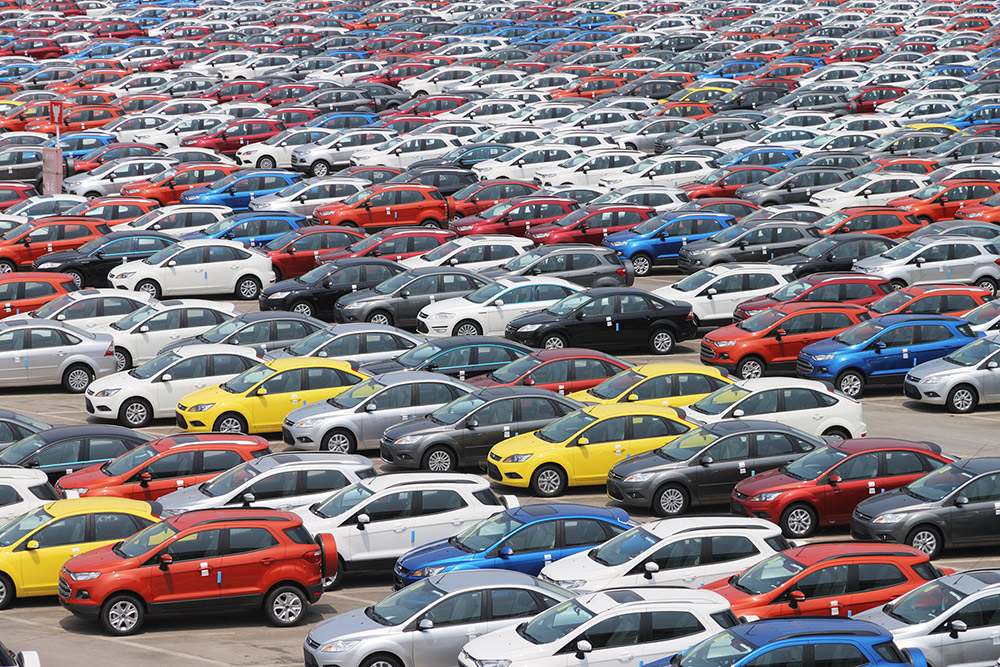
-
Article
Free Trade
A free trade area as defined by the General Agreement on Tariffs and Trade (GATT) is "a group of two or more customs territories in which duties and other restrictive regulations of commerce... are eliminated on substantially all the trade between the constituent territories in products originating in such territories."
"https://d2ttikhf7xbzbs.cloudfront.net/media/media/133a2d02-51cc-4318-b7c7-5aeb80b30cf3.png" // resources/views/front/categories/view.blade.php
https://d2ttikhf7xbzbs.cloudfront.net/media/media/133a2d02-51cc-4318-b7c7-5aeb80b30cf3.png
-
Article
Fur Industry
The Canadian fur industry consists of companies that buy raw furs from trappers, dealers or fur-marketing companies (e.g., Hudson's Bay Company raw-fur auctions), send them to fur dressers and dyers in Toronto, match the skins and cut and sew them into garments. Most manufacturers make coats and most specialize in two or three types of fur only. Before the coat can be finished, it must go through a fur-cleaning process and some companies do only this. Some cleaners also maintain cold fur-storage vaults to house furs during the summer, but many retail furriers also have their own vaults. Fur factories are generally small, with 279 of the 280 factories employing fewer than 50 people; only one of the 280 operating factories employed more than 100 people in 1986. In that year there were 3,700 furriers in the manufacturing work force, with about 2950 in Quebec, 675 in Ontario and 75 in Manitoba. Almost all fur companies are Canadian owned; there is some foreign ownership, mainly American, in the retail sector and some Japanese investment in the manufacturing sector.
"https://d2ttikhf7xbzbs.cloudfront.net/media/media/a4d6e476-5e53-4126-9ee6-313b64235660.jpg" // resources/views/front/categories/view.blade.php
https://d2ttikhf7xbzbs.cloudfront.net/media/media/a4d6e476-5e53-4126-9ee6-313b64235660.jpg
-
Article
Fur Trade in Canada (Plain-Language Summary)
The fur trade began in the 1600s in what is now Canada. It continued for more than 250 years. Europeans traded with Indigenous people for beaver pelts. The demand for felt hats in Europe drove this business. The fur trade was one of the main reasons that Europeans explored and colonized Canada. It built relationships between Europeans and Indigenous peoples. (This article is a plain-language summary of the fur trade. If you are interested in reading about this topic in more depth, please see our full-length entry, Fur Trade in Canada.)
"https://d2ttikhf7xbzbs.cloudfront.net/media/article_files/fur-trade/c002771k.jpg" // resources/views/front/categories/view.blade.php
https://d2ttikhf7xbzbs.cloudfront.net/media/article_files/fur-trade/c002771k.jpg
-
Article
Canada and the G7 (Group of Seven)
The G7, or Group of Seven, is an international group comprising the governments of the world’s largest economies: Germany, France, Italy, Japan, the United Kingdom, the United States and Canada. It was founded as the G6 in 1975 and became the G7 with the addition of Canada in 1976. The Group is an informal bloc; it has no treaty or constitution and no permanent offices, staff or secretariat. The leaders of the member states meet at annual summits to discuss issues of mutual concern and to coordinate actions to address them. The meeting location and the organization’s presidency rotates among the members. The European Union is also a non-enumerated member, though it never assumes the rotating presidency.
"https://d2ttikhf7xbzbs.cloudfront.net/media/new_article_images/G7/G7_summit_at_Shimakan.jpg" // resources/views/front/categories/view.blade.php
https://d2ttikhf7xbzbs.cloudfront.net/media/new_article_images/G7/G7_summit_at_Shimakan.jpg