
Browse "Trade"
-
Article
General Agreement on Tariffs and Trade (GATT)
The General Agreement on Tariffs and Trade (GATT) was an international trade agreement. It was signed by 23 nations, including Canada, in 1947 and came into effect on 1 January 1948. It was refined over eight rounds of negotiations, which led to the creation of the World Trade Organization (WTO). It replaced the GATT on 1 January 1995. The GATT was focused on trade in goods. It aimed to liberalize trade by reducing tariffs and removing quotas among member countries. Each member of the GATT was expected to open its markets equally to other member nations, removing trade discrimination. The agreements negotiated through GATT reduced average tariffs on industrial goods from 40 per cent (1947) to less than five per cent (1993). It was an early step towards economic globalization.
"https://d2ttikhf7xbzbs.cloudfront.net/media/media/397c53e8-7226-4f88-8181-2fc0d8fa3680.jpg" // resources/views/front/categories/view.blade.php
https://d2ttikhf7xbzbs.cloudfront.net/media/media/397c53e8-7226-4f88-8181-2fc0d8fa3680.jpg
-
Article
General Agreement on Tariffs and Trade (GATT) (Plain-Language Summary)
The General Agreement on Tariffs and Trade (GATT) was an international trade agreement. It was signed by 23 nations, including Canada, in 1947. It came into effect on 1 January 1948. It also led to the creation of the World Trade Organization (WTO) in 1995. The GATT was focused on trade in goods. It aimed to reduce tariffs and remove quotas among member countries. The GATT helped reduce average tariffs from 40 per cent in 1947 to less than five per cent in 1993. The GATT was an early step toward globalization. The WTO replaced the GATT on 1 January 1995. This article is a plain-language summary of the General Agreement on Tariffs and Trade (GATT). If you are interested in reading about this topic in more depth, please see our full-length entry: General Agreement on Tariffs and Trade (GATT).
"https://d2ttikhf7xbzbs.cloudfront.net/media/media/56003d5b-0a71-405a-8a17-f397815e78a0.jpg" // resources/views/front/categories/view.blade.php
https://d2ttikhf7xbzbs.cloudfront.net/media/media/56003d5b-0a71-405a-8a17-f397815e78a0.jpg
-
Article
Gold Standard
The gold standard is a monetary system in which the value of the currency unit (the Canadian dollar, for example) is defined in relation to the value of gold.
"https://development.thecanadianencyclopedia.ca/images/tce_placeholder.jpg?v=e9dca980c9bdb3aa11e832e7ea94f5d9" // resources/views/front/categories/view.blade.php
https://development.thecanadianencyclopedia.ca/images/tce_placeholder.jpg?v=e9dca980c9bdb3aa11e832e7ea94f5d9
-
Macleans
Home is where the barriers are
We’ve got free trade with Europe. Fantastic. Now how about all those trade restrictions between the provinces?This article was originally published in Maclean's Magazine on November 4, 2013
"https://development.thecanadianencyclopedia.ca/images/tce_placeholder.jpg?v=e9dca980c9bdb3aa11e832e7ea94f5d9" // resources/views/front/categories/view.blade.php
https://development.thecanadianencyclopedia.ca/images/tce_placeholder.jpg?v=e9dca980c9bdb3aa11e832e7ea94f5d9
-
Article
Imports to Canada
In international trade, imports refer to goods and services purchased by Canadian residents from residents of other countries. Billions of dollars of goods and services cross Canada’s border each year. In 2019, Canadians imported a total of $768 billion worth of goods and services. Canada’s largest source of imports by far is the United States. (See Canada-US Economic Relations.) The European Union, China and Mexico are also major sources of imported goods and services.
"https://d2ttikhf7xbzbs.cloudfront.net/media/new_article_images/ImportsToCanada/COSCO_Shipping_Universe_&_COSCO_Shipping_Azalea_(ship,_2019)_IMO_9785756,_Maasmond_pic.jpg" // resources/views/front/categories/view.blade.php
https://d2ttikhf7xbzbs.cloudfront.net/media/new_article_images/ImportsToCanada/COSCO_Shipping_Universe_&_COSCO_Shipping_Azalea_(ship,_2019)_IMO_9785756,_Maasmond_pic.jpg_IMO_9785756,_Maasmond_pic.jpg)
-
Article
International Economics
International economics consists of two main parts. The first is international trade theory and commercial policy. The second is international finance and balance of payments theory and policy.
"https://development.thecanadianencyclopedia.ca/images/tce_placeholder.jpg?v=e9dca980c9bdb3aa11e832e7ea94f5d9" // resources/views/front/categories/view.blade.php
https://development.thecanadianencyclopedia.ca/images/tce_placeholder.jpg?v=e9dca980c9bdb3aa11e832e7ea94f5d9
-
Article
International Monetary Fund
International Monetary Fund (IMF) is the principal independent international financial agency concerned with the management of the international monetary system.
"https://development.thecanadianencyclopedia.ca/images/tce_placeholder.jpg?v=e9dca980c9bdb3aa11e832e7ea94f5d9" // resources/views/front/categories/view.blade.php
https://development.thecanadianencyclopedia.ca/images/tce_placeholder.jpg?v=e9dca980c9bdb3aa11e832e7ea94f5d9
-
Article
International Trade
International trade is the buying and selling of goods and services between members of different countries. This exchange has been a key part of the Canadian economy since the first settlers came. Canadian settlers depended on exports of resources such as timber and grain (see Timber Trade History; Wheat). In the 20th century, Canada’s exports shifted to services, manufactured goods and commodities such as oil and metals. Since the 1980s, Canada has signed free trade agreements with dozens of countries to increase global trade and investment. Canada’s three biggest trading partners are the United States, the European Union and China. The United States is Canada largest trading partner by far. However, trade with China grew quickly in the 2010s, and this trend will likely continue. Click here for definitions of key terms used in this article.
"https://d2ttikhf7xbzbs.cloudfront.net/International Trade.jpg" // resources/views/front/categories/view.blade.php
https://d2ttikhf7xbzbs.cloudfront.net/International Trade.jpg
-
Macleans
Job Security and Outsourcing
This article was originally published in Maclean’s magazine on September 30, 1996. Partner content is not updated. So the meeting could have gone better. There was Mark Campbell, president of his own printing company, presenting to Kraft Canada Inc., executive level, in suburban Toronto. Initially, the meeting played exactly as Campbell had hoped.
"https://development.thecanadianencyclopedia.ca/images/tce_placeholder.jpg?v=e9dca980c9bdb3aa11e832e7ea94f5d9" // resources/views/front/categories/view.blade.php
https://development.thecanadianencyclopedia.ca/images/tce_placeholder.jpg?v=e9dca980c9bdb3aa11e832e7ea94f5d9
-
Article
Made Beaver
Hudson's Bay Company found it necessary to devise a unit of value that would accommodate Aboriginal people's bartering to European bookkeeping methods
"https://d2ttikhf7xbzbs.cloudfront.net/media/media/3de41ff0-80b9-44c7-b85a-1bb3d3054580.jpg" // resources/views/front/categories/view.blade.php
https://d2ttikhf7xbzbs.cloudfront.net/media/media/3de41ff0-80b9-44c7-b85a-1bb3d3054580.jpg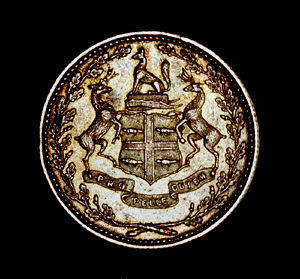
-
Macleans
Mexican Peso Slides
While Canada's dollar crisis reached a boiling point last week, Mexican Foreign Minister José Angel Gurria was in Canada for emergency meetings with bankers and senior federal ministers in an effort to shore up confidence in his country's own floundering currency.This article was originally published in Maclean's Magazine on January 23, 1995
"https://development.thecanadianencyclopedia.ca/images/tce_placeholder.jpg?v=e9dca980c9bdb3aa11e832e7ea94f5d9" // resources/views/front/categories/view.blade.php
https://development.thecanadianencyclopedia.ca/images/tce_placeholder.jpg?v=e9dca980c9bdb3aa11e832e7ea94f5d9
-
Macleans
Mexico's Peso Crisis
He has been dubbed the Accidental President - a shy, uncharismatic technocrat who won the highest office in Mexico almost by default after the assassination of the chosen candidate. And ever since he was sworn in on Dec.This article was originally published in Maclean's Magazine on January 16, 1995
"https://development.thecanadianencyclopedia.ca/images/tce_placeholder.jpg?v=e9dca980c9bdb3aa11e832e7ea94f5d9" // resources/views/front/categories/view.blade.php
https://development.thecanadianencyclopedia.ca/images/tce_placeholder.jpg?v=e9dca980c9bdb3aa11e832e7ea94f5d9
-
Article
Canada Energy Regulator (Formerly National Energy Board)
The National Energy Board (NEB) was established 1959. The NEB was responsible for the import and export of energy, international and interprovincial pipelines and international power lines (see Electric-Power Transmission). In 2019, the NEB was replaced by the Canada Energy Regulator (CER). Regulations made under the NEB remain in effect under the CER.
"https://d2ttikhf7xbzbs.cloudfront.net/media/media/d582fdd1-da33-4f4e-bb6a-d3573745bd88.jpg" // resources/views/front/categories/view.blade.php
https://d2ttikhf7xbzbs.cloudfront.net/media/media/d582fdd1-da33-4f4e-bb6a-d3573745bd88.jpg
-
Article
Pro Pelle Cutem
Pro pelle cutem (a Latin phrase meaning “a pelt for a skin”) is the traditional motto of the Hudson’s Bay Company (HBC). It was adopted soon after the company received its charter in 1670 and has remained on the HBC coat of arms, apart from a brief period of rebranding between 2002 and 2013.
"https://d2ttikhf7xbzbs.cloudfront.net/Hudsons_Bay_Company_Coat_of_Arms_2013.jpg" // resources/views/front/categories/view.blade.php
https://d2ttikhf7xbzbs.cloudfront.net/Hudsons_Bay_Company_Coat_of_Arms_2013.jpg
-
Article
Reciprocity (Plain-Language Summary)
Reciprocity was a free trade deal between the United States and Canada. (Reciprocity is when both sides give and receive.) The deal reduced import duties and tariffs on certain goods traded between the two countries. It was in effect from 1854 to 1866. It was at times a source of great controversy in both countries. It was replaced in 1878 by the National Policy. It was a more protectionist policy. It imposed tariffs on imported goods. This shielded manufacturers in Canada from US competition. A more limited reciprocity deal was reached in 1935. It ended in 1948 after both countries signed the General Agreement on Tariffs and Trade (GATT). This article is a plain-language summary of Reciprocity. If you would like to read about this topic in more depth, please see our full-length entry: Reciprocity.
"https://development.thecanadianencyclopedia.ca/images/tce_placeholder.jpg?v=e9dca980c9bdb3aa11e832e7ea94f5d9" // resources/views/front/categories/view.blade.php
https://development.thecanadianencyclopedia.ca/images/tce_placeholder.jpg?v=e9dca980c9bdb3aa11e832e7ea94f5d9