
Browse "Things"
-
Article
Criminal Procedure
Criminal procedure is an integral but distinct part of CRIMINAL LAW in Canada.
"https://development.thecanadianencyclopedia.ca/images/tce_placeholder.jpg?v=e9dca980c9bdb3aa11e832e7ea94f5d9" // resources/views/front/categories/view.blade.php
https://development.thecanadianencyclopedia.ca/images/tce_placeholder.jpg?v=e9dca980c9bdb3aa11e832e7ea94f5d9
-
Article
Criminology
Most of the criminological research in Canada has been done at those universities where centres focusing on research have evolved. The Université de Montréal established Canada's first School of Criminology with Denis Szabo in 1960.
"https://d2ttikhf7xbzbs.cloudfront.net/media/media/3db345a4-10ed-4079-a8dd-64108fa40934.jpg" // resources/views/front/categories/view.blade.php
https://d2ttikhf7xbzbs.cloudfront.net/media/media/3db345a4-10ed-4079-a8dd-64108fa40934.jpg
-
Article
Croatian Music in Canada
The first substantial immigration of Croatians to Canada occurred 1918-28 prior to the reconstitution of the union of the provinces of the Serbs, Croats, and Slovenes as Yugoslavia (Croatia declared independence from Yugoslavia 25 Jun 1991).
"https://development.thecanadianencyclopedia.ca/images/tce_placeholder.jpg?v=e9dca980c9bdb3aa11e832e7ea94f5d9" // resources/views/front/categories/view.blade.php
https://development.thecanadianencyclopedia.ca/images/tce_placeholder.jpg?v=e9dca980c9bdb3aa11e832e7ea94f5d9
-
Macleans
Croatia Fights Back
"Pay attention ladies and gentlemen, and you will see with your own eyes that our army left the Serb areas untouched.This article was originally published in Maclean's Magazine on August 21, 1995
"https://development.thecanadianencyclopedia.ca/images/tce_placeholder.jpg?v=e9dca980c9bdb3aa11e832e7ea94f5d9" // resources/views/front/categories/view.blade.php
https://development.thecanadianencyclopedia.ca/images/tce_placeholder.jpg?v=e9dca980c9bdb3aa11e832e7ea94f5d9
-
Article
Croix de Saint Louis
In Canada Louis-Hector de CALLIERE (1694) was the first to receive the decoration; Louis de Buade de FRONTENAC received it in 1697. The first Canadian chevalier was Pierre Le Moyne d' IBERVILLE (1699). By 1760 some 145 men had been decorated in Canada.
"https://d2ttikhf7xbzbs.cloudfront.net/media/media/22f54a67-0b82-4032-a05c-ab1245eb0f3f.jpg" // resources/views/front/categories/view.blade.php
https://d2ttikhf7xbzbs.cloudfront.net/media/media/22f54a67-0b82-4032-a05c-ab1245eb0f3f.jpg
-
Article
Crop Insurance
Crop Insurance An all-risk crop-insurance program is available to Canadian farmers under the authority of the federal Crop Insurance Act (of 1959) and through concurrent and complementary legislation enacted by each province.
"https://development.thecanadianencyclopedia.ca/images/tce_placeholder.jpg?v=e9dca980c9bdb3aa11e832e7ea94f5d9" // resources/views/front/categories/view.blade.php
https://development.thecanadianencyclopedia.ca/images/tce_placeholder.jpg?v=e9dca980c9bdb3aa11e832e7ea94f5d9
-
Article
Crop Research
Crop research may be defined as activity directed to making the production, marketing and use of commercial crops more efficient and profitable.
"https://development.thecanadianencyclopedia.ca/images/tce_placeholder.jpg?v=e9dca980c9bdb3aa11e832e7ea94f5d9" // resources/views/front/categories/view.blade.php
https://development.thecanadianencyclopedia.ca/images/tce_placeholder.jpg?v=e9dca980c9bdb3aa11e832e7ea94f5d9
-
Article
Crops
Crops are plant species grown for human or animal consumption or for special purposes (e.g., flax, tobacco). In Canada, most major crops grown are used for food and feed.
"https://d2ttikhf7xbzbs.cloudfront.net/media/media/f17f302e-07ae-4656-b689-252cc09a6231.JPG" // resources/views/front/categories/view.blade.php
https://d2ttikhf7xbzbs.cloudfront.net/media/media/f17f302e-07ae-4656-b689-252cc09a6231.JPG
-
Collection
Crops in Canada
Crops are plant species grown for human or animal consumption or for special purposes (e.g., flax, tobacco). In Canada, most major crops grown are used for food and feed. Use this collection to browse encyclopedic articles on the various crops grown in Canada.
"https://d2ttikhf7xbzbs.cloudfront.net/media/media/8fb030bb-1178-4b1e-9e5c-5fd92338f4d2.jpg" // resources/views/front/categories/view.blade.php
https://d2ttikhf7xbzbs.cloudfront.net/media/media/8fb030bb-1178-4b1e-9e5c-5fd92338f4d2.jpg
-
Article
Crow
The crow family (Corvidae) is a large family of birds that includes jackdaws, choughs, jays, magpies and nutcrackers as well as crows and ravens.
"https://development.thecanadianencyclopedia.ca/images/tce_placeholder.jpg?v=e9dca980c9bdb3aa11e832e7ea94f5d9" // resources/views/front/categories/view.blade.php
https://development.thecanadianencyclopedia.ca/images/tce_placeholder.jpg?v=e9dca980c9bdb3aa11e832e7ea94f5d9
-
Article
Crow Lake
Crow Lake is the debut novel by Mary Lawson, a Canadian-born author who lives in Britain. Set in a fictional community in Northern Ontario, Crow Lake tells the story of four children who are orphaned after their parents are killed in a traffic accident. Published in 2002, the novel was a best-seller in Canada and the United States. It has been published in more than two dozen countries and in several languages. It won the Books in Canada First Novel Award (now the Amazon.com First Novel Award) in 2003, as well as the McKitterick Prize for a first novel published in the United Kingdom by an author older than 40. In 2010, CBC Radio listeners selected Crow Lake as one of the Top 40 essential Canadian novels of the decade. It was also listed as one of 150 books to read for Canada’s sesquicentennial celebrations in 2017.
"https://development.thecanadianencyclopedia.ca/images/tce_placeholder.jpg?v=e9dca980c9bdb3aa11e832e7ea94f5d9" // resources/views/front/categories/view.blade.php
https://development.thecanadianencyclopedia.ca/images/tce_placeholder.jpg?v=e9dca980c9bdb3aa11e832e7ea94f5d9
-
Editorial
Isapo-muxika (Crowfoot) and Treaty 7
The following article is an editorial written by The Canadian Encyclopedia staff. Editorials are not usually updated.
"https://d2ttikhf7xbzbs.cloudfront.net/media/media/f8dad739-53dc-468e-80b8-27bf80b69c29.jpg" // resources/views/front/categories/view.blade.php
https://d2ttikhf7xbzbs.cloudfront.net/media/media/f8dad739-53dc-468e-80b8-27bf80b69c29.jpg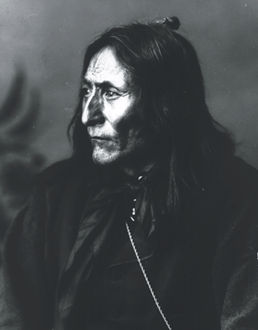
-
Article
Crown
In a monarchy, the Crown is an abstract concept or symbol that represents the state and its government. In a constitutional monarchy such as Canada, the Crown is the source of non-partisan sovereign authority. It is part of the legislative, executive and judicial powers that govern the country. Under Canada’s system of responsible government, the Crown performs each of these functions on the binding advice, or through the actions of, members of Parliament, ministers or judges. As the embodiment of the Crown, the monarch — currently King Charles III — serves as head of state. The King and his vice-regal representatives — the governor general at the federal level and lieutenant-governors provincially — possess what are known as prerogative powers; they can be made without the approval of another branch of government, though they are rarely used. The King and his representatives also fulfill ceremonial functions as Head of State.
"https://d2ttikhf7xbzbs.cloudfront.net/Royal_Coat_of_Arms_of_the_United_Kingdom.svg.png" // resources/views/front/categories/view.blade.php
https://d2ttikhf7xbzbs.cloudfront.net/Royal_Coat_of_Arms_of_the_United_Kingdom.svg.png
-
Article
Crown Corporation
Crown corporations are wholly owned federal or provincial organizations that are structured like private or independent companies. They include enterprises such as the Canadian Broadcasting Corporation (CBC), VIA Rail, Canada Post and the Bank of Canada; as well as various provincial electric utilities. Crown corporations have greater freedom from direct political control than government departments. As long as crown corporations have existed, there has been debate about their structure, accountability and role in the economy.
"https://d2ttikhf7xbzbs.cloudfront.net/media/new_article_images/HockeyNightInCanada/626px-CBC_logo_1940–1958.png" // resources/views/front/categories/view.blade.php
https://d2ttikhf7xbzbs.cloudfront.net/media/new_article_images/HockeyNightInCanada/626px-CBC_logo_1940–1958.png
-
Article
Crown Grant to the Mohawks of the Bay of Quinte
The Crown Grant to the Mohawks of the Bay of Quinte, also known as Treaty 3½ or the Simcoe Deed, was issued in 1793. (See also Haudenosaunee and Tyendinaga Mohawk Territory.) Ten years earlier, the Crawford Purchase had acquired a large piece of territory. The British granted a small portion of this purchase to the Mohawks in recognition of their support to the Crown during the American Revolution. Gradually, the Crown grant was reduced due to encroachment by non-Indigenous settlers. The ownership of the land is still being contested. (See also Treaties with Indigenous Peoples in Canada and Upper Canada Land Surrenders.)
"https://d2ttikhf7xbzbs.cloudfront.net/media/new_article_images/Tyendinaga/LandingOfTheMohawks.jpg" // resources/views/front/categories/view.blade.php
https://d2ttikhf7xbzbs.cloudfront.net/media/new_article_images/Tyendinaga/LandingOfTheMohawks.jpg